Thursday, November 25, 2010

Introduction Volume of Liquid

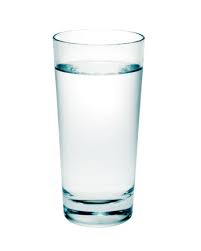
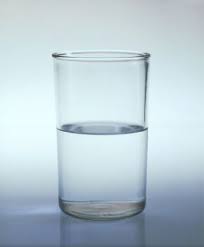
Volume of liquid refers to the capacity of liquids in the containers. In Mathematics Year 2, pupils will be taught the introduction, measuring and comparing Volume of Liquid. In the introduction section, pupils learn about the vocabulary related to volume like full, half full and empty. In measuring volume of liquid, they will learn on how to measure using uniform non-standard unit like a bottle of water is equal to how many glasses of water or a glass of water is equal to how many table spoon of water and so on. These activities are fun because it is using instruments rather than calculation using numbers.

The pupils in Year 2 also learn about comparing the volume of two liquids by direct comparisons. They will be given two glass of water which have the same size and shape and make comparisons which is more or less. Pupils can make comparisons and do their measurement by observation. After measuring using uniform non-standard unit, its time to move on to measure volumes of liquid using standard unit. The standard units is more accurate and uniform, the unit normally use in volume of liquid are litre (ℓ) and millilitre (mℓ). Liter is larger than milliliter which :

1 litre (ℓ) = 1000 mililitres (m ℓ)

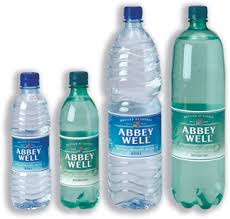
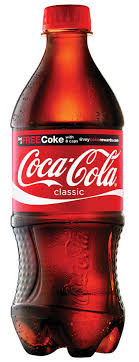
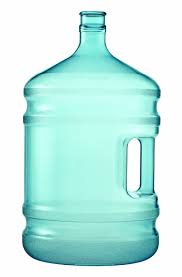
The pupils in Year 2 will learn the unit in litre which only basic. Normally they asked about the quantity of water in litre which filled in bottles or containers which mentioned the measurement. For examples :
Teaching Activities

Based on the above teaching materials, it is suitable to create activities for high achiever students and low achiever students. For the high achiever students, the activity should be more challenge, attractive and indirect. It is opposite to the low achiever student activity which is easy, directly to get answer and of course attractive. Anyway, in the both activity it consider the creative thinking skills which can make them to think in order to get the answers.


  • High Achiever Students
Topic                        : Volume of Liquids
Learning Area            :  6.1    Measuring and comparing volumes of liquid
Learning Objective   :  6.1.1 Undertand and use the vocabulary related to volume of liquid.
Creative and thinking skills     : Comparing, identifying, memorising
Moral Values             :  Save our water, cleanliness, careful

Individual Activity : Memorise and Fill
Learning Outcome  :
  • Use the vocabulary related to volume in practical context.
Teaching Aids         :
  • Big Mineral water bottles
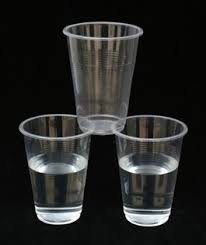
  • 3 clear plastic cup with capacity full, half full and empty
  • 5  empty clear plastic cup.
Procedures            :
1.   Fill 3 glass of water with capacity full, half full and empty.
2.   Introduce to pupils the vocabulary of full, half full and empty.
3.   Ask a pupil to identify the capacity of liquids in full, half full and empty.
4.   After pupils able to identify, give 5 random sequence capacity of liquids to a pupils. For example :
     full, empty, half full, half full, full
5.   According to the sequence, pupils fill up the empty cups with the capacity mentioned just now in 20 seconds.
full

empty

 
half full

 
half full

full

6.   Repeat with other sequence to other pupils.


  • Low Achiever Students
Topic                        : Volume of Liquids
Learning Area            :  6.1    Measuring and comparing volumes of liquid
Learning Objective   :  6.1.1 Undertand and use the vocabulary related to volume of liquid.
Creative and thinking skills     : Comparing, identifying, memorising
Moral Values             :  Save our water, cleanliness, careful

Individual Activity : Guess the Capacity
 Learning Outcome  :
  •  Use the vocabulary related to volume in practical context.
Teaching Aids         :
  • Mineral water bottles
  • 3 clear plastic cup with capacity full, half full and empty
  • 1 clear plastic cup.
Procedures            :
1.   Fill 3 glass of water with capacity full, half full and empty.
2.   Introduce to pupils the vocabulary of full, half full and empty.
3.   Ask different pupils come out to fill the cup with full, half full and empty.
4.   After pupils able to identify, pupils ask to fill their cup with capacity of liquids mentioned by teacher. For example :
Teacher say            : Full
Pupils                     : (Fill the cup full)
Teacher say            : Half full
Pupils                     : (Fill the cup half full)


6.   Repeat with other capacity and pupils can be ask to do in front of the class individually after they are able to understand full, half full and empty.

Teaching Aids in Learning the Concept of Volume of Liquid

Teaching aids are the most important things that help teachers in their explanation and children understanding in volume of liquids. The materials that I choose are cheap and easy to find. It could be anywhere around them either at home or at school. The teaching aids also save to use and easy to handle. Children will like to learn using the materials that they always see and use around them and find out that many things can be recycle and useful if you know how to do it.

1. Mineral Water Bottle (1500mℓ or 1.5ℓ /  500mℓ)


This type of bottle is cheap, easy to obtain and children always use it in their daily life. It is save and suitable for all levels of pupils. Pupils no need to create it or buy to get this type of bottle because its always around us. They just need to pick it up or collect it surrounding them. The criteria of the bottle are suitable to use in comparison because it is clear and transparent. Pupils only need to take off the label of the bottle so that we can see the bottle clearly from outside before doing the comparisons.

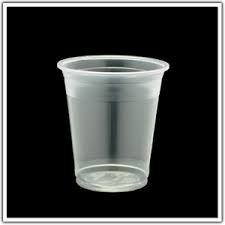
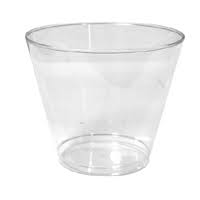
2. Clear Plastic Cup


Plastic cup always be the common materials use to fill up drinks in the stalls or fast food centre. Although in school, the school canteen also used these types of cup to fill up drinks. The plastic materials are cheap or economical and it also can be the teaching aids in teaching pupils the concept of liquids such as full, half full, empty, more than half full or less than half full. Children can see very clearly the volume of liquids because it is transparent. These cups also very light, easy to handle and store. It save our space in storing. Children will be very happy to do their learning using these cups and fill it with different colours of liquids.


How To Measure Volume of Liquid

There are some steps to measure volume of liquids in the correct and proper ways. Refer the video below :

How to measure the volume of a liquid using a graduated cylinder


How to correctly read a graduated cylinder


Measuring water by Peter Weatherall


According to the above videos which using the graduated cylinder, the steps that we need to take notes are : 
i)   Make sure the graduated cylinder or cylinder is place on the flat surface.
ii)  To read the measurement, read at the bottom of the curve line.
The next video teaches us how to read the level of liquid in the meniscus. In order to read consistently and accurately, we need to read the level of liquid at the eye level.


Read meniscus at eye level

Misconception on Capacity

According to Piaget’s, the children in the age around 7 will have conservation develops when they reaches the stage of concrete operations. They may believe that the amount of liquid increase or decrease when it is poured from one container to another.

The following are the video which support Piaget’s believe. The children are younger who below 8 years old. They normally judge the volume based on the length or height rather than on capacity. Please refer http://www.youtube.com/watch?v=qYtNhNP69lk&feature=related


Next example is the girl who are more mature than the above children. She is able to do reversibility and thinking concrete. She already have the concept of liquids and not disturb by the size of the container. They are able to tell why the containers have the same volume of liquids although the containers are different. http://www.youtube.com/watch?v=gA04ew6Oi9M&NR=1